Greenhouses along the coast near Ierapetra, Crete, at sunset

THE RIGHT CONTEXT

The missing piece of the puzzle

Our technology runs on low-temperature heat: waste heat, or geothermal energy.
That kind of heat is everywhere, and mostly left unused.
Wherever it meets the sea, we can put it to work:

Greenhouses along the coast near Ierapetra, Crete, at sunset

THE RIGHT CONTEXT

The missing piece of the puzzle

Our technology runs on low-temperature heat: waste heat, or geothermal energy.
That kind of heat is everywhere, and mostly left unused.
Wherever it meets the sea, we can put it to work:

WARM, DRY CLIMATES

Unused potential

Low-temperature waste heat and geothermal often go unused because low heat demand does not justify the investment. We turn idle heat into freshwater where water is scarcest.

Warm, dry climates: water demand stays high most of the year while heat demand stays low, leaving waste heat and geothermal potential unused

MODERATE CLIMATES

Counter-seasonal demand

Paired with a heat offtaker, our process uses heat in cascade: it passes through our facility and on to the offtaker at a lower temperature. When heat demand peaks in winter, water demand is low, and the other way around in summer.

Moderate climates: heat demand peaks in winter and water demand peaks in summer, so the same heat source can serve both

Our sweet spot

Coastal, a geothermal or waste heat source, and greenhouses.

One heat source, two products, and a customer on site.

Coastal, a geothermal or waste heat source, and greenhouses.

One heat source, two products, and a customer on site.

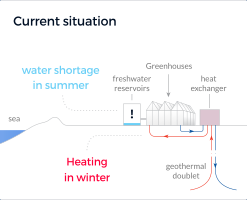
Greenhouses with a geothermal heating network that sits idle in summer

Greenhouses install geothermal heating networks to expand their growing season. The big investment sits idle throughout the summer months, when lack of water threatens harvests.

DELTADIO next to the greenhouses: heat goes to the greenhouses in winter and drives desalination in summer

The greenhouses take our heat and buy our water. In winter, the heat goes to the greenhouses. In summer, when farmers need water most, heat that would otherwise sit idle drives desalination.

Seasonal energy shift in the cascade system

The key is to balance the energy at the right moment: who needs what, and when do they need it?

Summer

Heat demand comes to a halt. The geothermal energy that would sit unused is valorised completely for the desalination process.

Spring/Autumn

Peak winter

Summer: all geothermal heat drives desalination and the reservoirs are replenished

Freshwater reservoirs are being replenished, not depleted.

Summer

Heat demand comes to a halt. The geothermal energy that would sit unused is valorised completely for the desalination process.

Summer: all geothermal heat drives desalination and the reservoirs are replenished

Freshwater reservoirs are being replenished, not depleted.

Spring/Autumn

Peak winter

Summer

Heat demand comes to a halt. The geothermal energy that would sit unused is valorised completely for the desalination process.

Summer: all geothermal heat drives desalination and the reservoirs are replenished

Freshwater reservoirs are being replenished, not depleted.

Spring/Autumn

Peak winter

NEXT STEPS

Time to make a difference

and this is how we're doing it: